
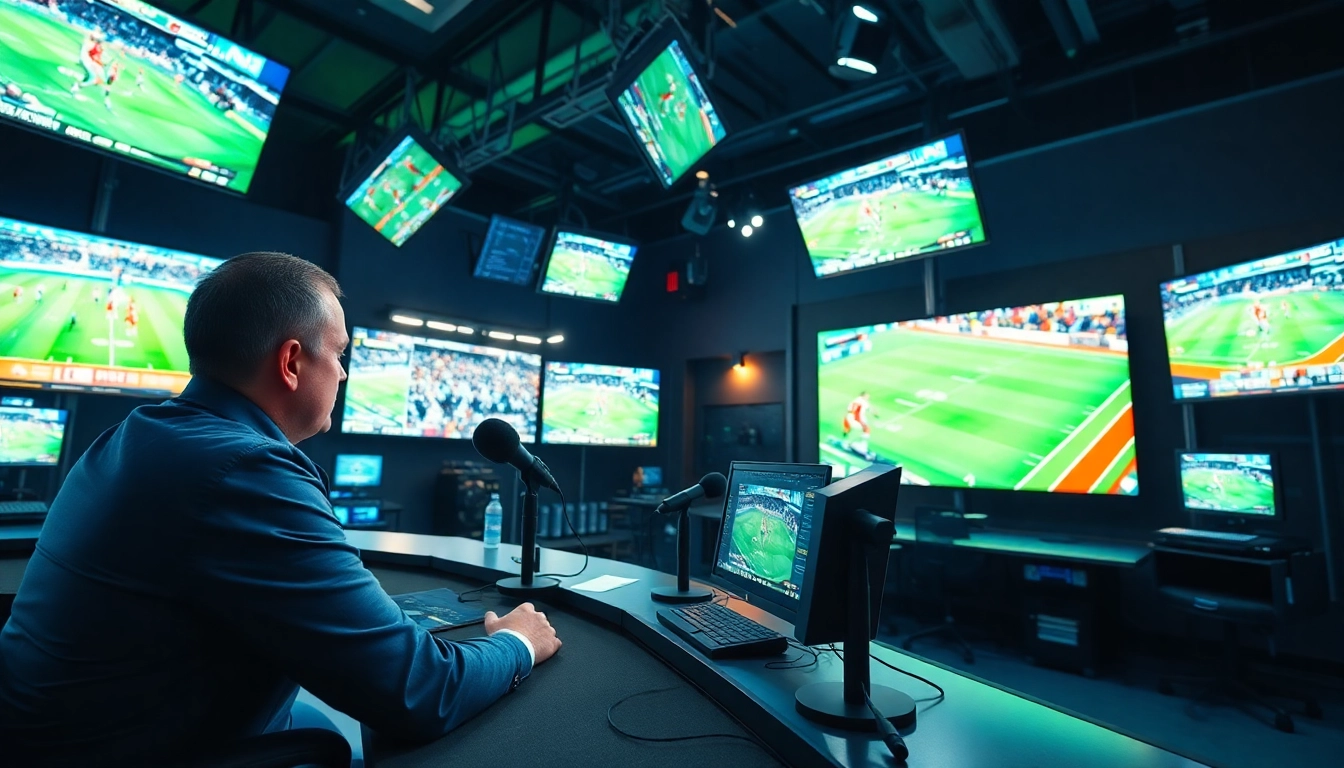
Introduction to Sports Broadcasting
Definition and Importance of Sports Broadcasting
Sports broadcasting refers to the live or recorded coverage of sports events through various media channels, including television, radio, and online streaming platforms. The Sports Broadcasting industry plays a critical role in how fans engage with their favorite teams and athletes, making it a vibrant field characterized by dynamic content creation and audience interaction. It not only connects fans to the action on the field but also influences sports marketing, sponsorships, and team revenues, establishing a multi-billion-dollar industry worldwide.
History of Sports Broadcasting Evolution
The history of sports broadcasting dates back to the early 20th century when radio started airing play-by-play commentary of significant sports events. The first-ever radio broadcast of a baseball game occurred in 1921, paving the way for a new era in sports entertainment. With the advent of television in the 1950s, sports broadcasting experienced an unprecedented boom. Iconic events like the Super Bowl and the FIFA World Cup brought millions of viewers together, illustrating the profound cultural impact of televised sports. As innovations continued, cable television expanded the reach, and the internet revolutionized how we consume sports, leading to live streaming, on-demand content, and the rise of social media as a platform for sports commentary.
Current Trends in Sports Broadcasting
Today, several trends are shaping the landscape of sports broadcasting. The transition to digital platforms has become a focal point, with streaming services gaining popularity over traditional cable. Enhanced viewer experiences through interactive content, augmented reality (AR), and virtual reality (VR) immersion are on the rise. Additionally, the growing focus on analytics is allowing broadcasters to enhance storytelling and better cater to viewer preferences. eSports, as a booming sector of live entertainment, has also enticed traditional broadcasters to adapt and expand their offerings. Finally, the impact of social media cannot be overstated, as it allows real-time engagement and discussion among fans, radically changing how sports content is consumed and shared.
Understanding the Technology Behind Sports Broadcasting
Broadcasting Equipment Essentials
The technology behind sports broadcasting is fundamental to delivering high-quality content. Essential broadcasting equipment includes cameras, microphones, and transmission devices. Multi-angle cameras capture live action from various perspectives, enhancing the viewing experience. High-definition (HD) and ultra-high-definition (UHD) video formats are now standard, providing crystal-clear images. Audio is equally crucial; using high-quality microphones ensures that commentary and crowd sounds are captured effectively. Furthermore, broadcasting trucks equipped with advanced editing software and broadcasting tools are essential during live events to manage feeds and deliver polished content seamlessly.
Role of Software in Sports Broadcasting
Software plays a vital role in sports broadcasting operations. From content management systems to scheduling software, broadcasters rely on technology to organize and deliver content efficiently. Real-time graphics software enables on-screen displays of scores, statistics, and other real-time information that enrich the viewing experience. Software solutions for automated highlights and replay analysis leverage artificial intelligence to streamline production workflows, allowing broadcasters to deliver timely, engaging content to audiences. Moreover, social media integration tools help in monitoring fan engagement and interactions across platforms, providing insights for future broadcasts.
Emerging Technologies in Sports Broadcasting
Emerging technologies are transforming sports broadcasting’s future. Artificial intelligence is revolutionizing analytics by processing vast amounts of data to deliver insights about player performance, game strategies, and viewer preferences. Machine learning algorithms identify patterns that enhance viewer targeting for advertisements and content recommendation. Blockchain technology is also finding its way into rights management and ticketing, ensuring transparency and security. Innovations in 5G connectivity will further enable real-time streaming of high-definition content to mobile devices, allowing fans unprecedented access to live events from anywhere.
Exploring Content Creation in Sports Broadcasting
Storytelling Techniques for Sports Broadcasting
Storytelling is integral to engaging sports broadcasting. Quality broadcasts go beyond merely transmitting the game; they craft narratives that resonate with audiences. Techniques include establishing character arcs (players’ journeys), conflict (teams’ challenges), and resolution (game outcomes) to create emotional investment. Broadcasters use interviews, behind-the-scenes highlights, and historical context to deepen viewer connection. The effective use of commentary enhances storytelling by providing insights that entertain while educating audiences, making the broadcast relatable and immersive.
Engaging Audiences through Live Coverage
Live coverage is a pivotal aspect of sports broadcasting, enabling real-time interaction with audiences. Engaging viewers during an event requires a combination of expert analysis and emotional engagement. Incorporating social media live feeds and fan polls creates an interactive experience, allowing viewers to voice opinions and feel part of the action. Broadcasters can also utilize instant replays and slow-motion features to enhance excitement during key game moments, capturing and amplifying dramatic visuals that excite audiences.
Editing and Production Best Practices
High-quality editing and production practices are essential for delivering compelling sports broadcasts. Key practices include establishing a coherent narrative structure, maintaining seamless transitions, and optimizing audio-visual elements. Using techniques such as color grading and sound mixing can significantly enhance production value, making broadcasts visually striking and audibly compelling. Planning and rehearsing before live events ensure that the broadcast runs smoothly, while post-production edits help craft highlights and recaps that keep audiences engaged in the days following the event.
Key Challenges in Sports Broadcasting
Managing Rights and Royalties
Rights management is one of the most complex challenges in sports broadcasting. Negotiating broadcasting rights involves significant legal and financial considerations, with agreements often encompassing both domestic and international distributions. Broadcasters must navigate a competitive landscape, ensuring compliance with copyright regulations while maximizing revenue opportunities. Technology can aid in this area; leveraging blockchain for transparent rights management and streamlining royalty distributions helps mitigate disputes and enhances trust between parties.
Adapting to Viewer Preferences
Adapting to changing viewer preferences is crucial in a fast-evolving media landscape. Audiences possess diverse interests, prompting broadcasters to offer varied content types—such as highlights, analysis, and interviews—to keep viewers engaged. Data analytics play a vital role in understanding viewer behavior, allowing broadcasters to tailor content based on what resonates most with their audience. Furthermore, offering flexible viewing options, like on-demand content and multiple viewing angles, caters to diverse consumption patterns, enhancing overall viewer satisfaction.
Competition Among Broadcasters
The sports broadcasting market is increasingly competitive, with many players vying for audience attention. Differentiation through unique content, innovative broadcasting strategies, and superior viewer experiences is essential. Coalition alliances between networks and digital platforms may be employed to broaden reach and share resources. Additionally, investing in technology and leveraging social media for outreach allows broadcasters to stay ahead of competitors while engaging new demographics who prefer newer mediums over traditional channels.
Measuring Success in Sports Broadcasting
Key Performance Indicators (KPIs)
Measuring success in sports broadcasting involves analyzing key performance indicators (KPIs) that evaluate various aspects of broadcasts. Viewership numbers, engagement rates, and audience retention metrics are vital for assessing the effectiveness of broadcasts. Additionally, analyzing social media interactions, website traffic, and conversion rates on merchandise and ticket sales provide valuable insights into audience behavior. Broadcasters often use an integrated approach, combining quantitative data with qualitative feedback to devise strategies that enhance future broadcasts.
Feedback Mechanisms for Audience Engagement
Engaging audiences doesn’t end once the broadcast is over; feedback mechanisms are essential for continuous improvement. Surveys and polls provide direct insights into viewer preferences and experiences, helping broadcasters understand the strengths and weaknesses of their content. Analyzing comment sections on social media during broadcasts helps gauge real-time reactions and issues. Implementing feedback loops allows for adaptive strategies, fostering long-term relationships with audiences by aligning content with their interests and needs.
Future Prospects and Industry Forecasts
The future of sports broadcasting looks promising, driven by technological advancements and shifting consumer habits. As digital platforms continue to dominate, broadcasters will increasingly explore innovative ways to enhance viewer experiences, such as personalized content and immersive technologies. eSports broadcasting is also set to grow, appealing to younger, tech-savvy audiences. Sustainability initiatives, such as reducing the environmental impact of broadcasting operations, are becoming integral to future industry practices. Ultimately, adaptability and an audience-centric approach will define successful strategies in the rapidly evolving sports broadcasting landscape.
Frequently Asked Questions
What is sports broadcasting?
Sports broadcasting involves airing live or recorded sports events through media channels such as television, radio, and digital platforms, connecting fans to the games.
What technologies are used in sports broadcasting?
Key technologies include multi-angle cameras, high-definition video equipment, real-time graphics software, and live streaming technology for enhanced viewer experiences.
How has social media impacted sports broadcasting?
Social media enables real-time fan interaction, enhances audience engagement, and offers platforms for content sharing, fundamentally transforming viewer experiences in sports.
What are the key challenges in sports broadcasting?
Challenges include managing broadcasting rights, adapting to diverse viewer preferences, and facing intense competition among various broadcasting entities.
How can success be measured in sports broadcasting?
Success can be assessed through KPIs like viewership ratings, audience engagement metrics, social media interactions, and feedback mechanisms that inform content strategy.